In 1960, a plastic surgeon named Maxwell Maltz published a book called Psycho-Cybernetics in which he made an observation that would become one of the most enduring and most misrepresented claims in popular psychology. Maltz had noticed, over years of reconstructive work, that his patients typically required a minimum of twenty-one days to adjust to a new face, a new nose, or the absence of a limb. He noted this as a minimum — a threshold below which adjustment rarely occurred — and offered it as a clinical observation, not a universal law. Within a decade, the self-help industry had stripped the nuance entirely. The "21-day rule" became gospel: three weeks of consistent effort, the books promised, and any habit could be formed, any behaviour changed, any new identity installed. The actual research tells a different and considerably more interesting story.
The 21-Day Myth — And the Kernel of Truth
In 2009, Phillippa Lally, a health psychology researcher at University College London, published the first rigorous empirical investigation of habit formation timelines in the European Journal of Social Psychology. Her study tracked 96 participants over twelve weeks as they attempted to adopt a new daily behaviour — ranging from simple actions such as drinking a glass of water at lunch to more complex ones such as running for fifteen minutes before dinner. The researchers measured automaticity: the degree to which the behaviour occurred without conscious deliberation or effort.
The findings dismantled the 21-day myth with considerable precision. The average time for a new behaviour to reach automaticity was 66 days — more than three times the popular figure. But the range was far more revealing than the average: participants achieved automaticity in as few as 18 days and as many as 254 days. Simple behaviours in consistent contexts formed fastest. Complex behaviours requiring coordination, planning, or emotional regulation took longest. The variance was enormous, and it depended not on willpower or motivation but on the neurological complexity of the task.
Maltz was not entirely wrong. His 21-day observation corresponds roughly to the minimum time required for a new neural pathway to achieve sufficient strength to be detectable — to cross the threshold from effortful to slightly less effortful. But detectable change is not the same as automatic behaviour. The first three weeks represent the beginning of a process, not its completion. Understanding why requires a closer look at the neurological machinery of change itself.
Phillippa Lally et al. tracked 96 participants adopting new daily behaviours over 12 weeks. Key findings: Average time to automaticity was 66 days. Range: 18–254 days. Simple behaviours (drinking water with lunch) formed fastest; complex behaviours (daily exercise) took longest. Missing a single day did not significantly impact the overall trajectory. The self-help industry's "21-day rule" was not supported by the data.
What Neuroplasticity Actually Is
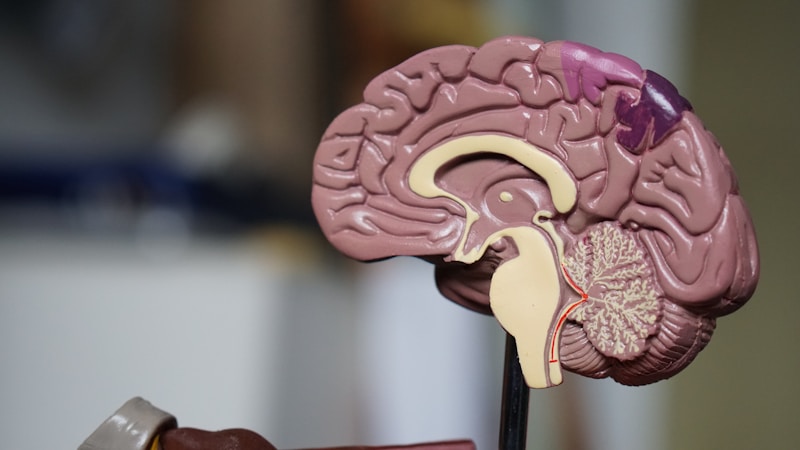
The term neuroplasticity refers to the brain's capacity to reorganise its structure and function in response to experience. This is not a metaphor. The brain physically changes — neurons grow new connections, existing connections strengthen or weaken, entire cortical regions can be reassigned to new functions. The discovery that this process continues throughout adulthood, not merely during childhood development, ranks among the most significant findings in twentieth-century neuroscience.
Michael Merzenich, a neuroscientist at the University of California, San Francisco, is widely regarded as the pioneer of modern neuroplasticity research. His experiments in the 1980s and 1990s demonstrated that the brain's cortical maps — the regions of the cortex devoted to processing specific types of sensory input — are not fixed. When a monkey's finger was amputated, the cortical area formerly devoted to that finger was gradually colonised by adjacent areas. When a monkey was trained to use a specific finger repeatedly, the cortical representation of that finger expanded. The brain, Merzenich showed, is not hardware. It is something closer to living tissue that reconfigures itself continuously in response to what is demanded of it.
Norman Doidge, a psychiatrist and researcher, brought this science to a broader audience through clinical case studies that documented remarkable instances of neural reorganisation. Patients with stroke damage who recovered functions that their lesions should have permanently destroyed. Individuals born with half a brain who developed near-normal cognitive function as the remaining hemisphere reorganised to compensate. These cases demonstrated that neuroplasticity is not a subtle, marginal phenomenon. It is the brain's fundamental operating principle.
At the cellular level, neuroplasticity operates through several distinct mechanisms. Long-term potentiation (LTP) — the strengthening of synaptic connections through repeated co-activation — is the primary mechanism of learning. When two neurons fire simultaneously and repeatedly, the connection between them becomes stronger, requiring less stimulation to activate in the future. This is the cellular basis of Donald Hebb's famous principle: neurons that fire together wire together. Synaptic pruning provides the complementary mechanism: connections that are not regularly activated are weakened and eventually eliminated, following a "use it or lose it" principle. Myelination — the insulation of frequently used neural pathways with a fatty sheath that increases transmission speed by up to one hundred times — represents the final stage of pathway consolidation, transforming a slow, effortful neural circuit into a fast, automatic one.
“The brain is not hardware. It is something closer to living tissue that reconfigures itself continuously in response to what is demanded of it.”
Three Phases of Neural Pathway Construction
The formation of a new automatic behaviour does not proceed in a smooth, linear trajectory. Research in both laboratory and clinical settings suggests that the process moves through three qualitatively distinct phases, each with its own neurological characteristics and its own subjective experience.
The first phase is disruption. Before a new pattern can be installed, the old pattern must be interrupted. This is the phase that feels most uncomfortable, because the brain's existing circuitry is being destabilised. The old automatic behaviour — reaching for food in response to stress, defaulting to self-criticism, avoiding physical activity — has deep synaptic roots. It fires easily, requires no conscious effort, and produces a predictable neurochemical response. Disrupting it requires the conscious intervention of the prefrontal cortex, which is metabolically expensive and cognitively demanding. The subjective experience of disruption is often described as discomfort, irritability, or a sense of wrongness. This is not a sign that the change is failing. It is the neurological signature of an established circuit being challenged.
The second phase is installation. The new pattern is introduced and activated for the first time, ideally under conditions that maximise encoding efficiency. The initial activation of a new neural pathway is weak — a faint electrical trace in a brain that has been running the old programme for years or decades. Each subsequent activation strengthens the trace slightly through long-term potentiation. The critical variable during this phase is the quality of encoding: new pathways formed during theta-dominant brainwave states show significantly stronger initial potentiation than those formed during normal waking consciousness, which is why interventions that access the theta window can substantially accelerate the installation phase.
The third phase is consolidation. The new pathway, now established but still fragile, must be strengthened through repetition until it achieves sufficient synaptic weight to fire automatically — until it no longer requires conscious effort to activate. This is the longest phase, and it is the phase that Lally's 66-day average primarily reflects. During consolidation, the new pathway gradually transitions from conscious, effortful activation (mediated by the prefrontal cortex) to automatic, effortless activation (mediated by the basal ganglia). Myelination of the pathway increases transmission speed. Synaptic pruning weakens the old competing pathway. Eventually, the new behaviour becomes the default — the one the brain selects automatically in response to familiar triggers.
Phase 1 — Disruption (Days 1–14): Old pattern interrupted. Prefrontal cortex must override basal ganglia. Subjectively uncomfortable. High conscious effort required.
Phase 2 — Installation (Days 7–30): New pattern activated and strengthened through repetition. Initial long-term potentiation occurs. Theta-state access accelerates encoding. New pathway detectable but fragile.
Phase 3 — Consolidation (Days 21–66+): New pathway strengthened to automaticity. Myelination increases speed. Old pathway weakened through disuse. Behaviour shifts from effortful to automatic. Sleep consolidation critical.
Why Repetition Matters More Than Duration
The popular emphasis on counting days can obscure a more important variable: the frequency and quality of activation matter more than the mere passage of time. A person who practises a new behaviour once a day for sixty-six days is in a fundamentally different neurological position than one who practises it three times a day for twenty-two days. The total number of activations may be comparable, but the spacing, consistency, and emotional context of those activations all influence the rate of pathway consolidation.
Hermann Ebbinghaus, the German psychologist who pioneered the study of memory in the 1880s, established that spaced repetition — distributing practice over time rather than concentrating it in a single session — produces significantly more durable learning than massed practice. His findings have been replicated extensively in the century and a half since, and the underlying mechanism is now well understood: each reactivation of a memory trace triggers a new round of protein synthesis at the synapse, physically strengthening the connection. Spacing these reactivations allows the cellular consolidation process to complete between sessions, producing a more robust structural change than rapid, concentrated repetition.
Sleep plays a role in this process that cannot be overstated. During slow-wave sleep and REM sleep, the brain replays recently activated neural patterns, strengthening the synaptic connections formed during the day. This sleep-dependent consolidation is not a supplementary process — it is an essential component of learning. Research has consistently demonstrated that subjects who sleep after learning show significantly better retention and stronger automaticity than those who remain awake for the same duration. A person who is attempting to install a new neural pathway but sleeping poorly is undermining the consolidation phase at a fundamental biological level.
“A person who practises a new behaviour once a day for sixty-six days is in a fundamentally different neurological position than one who practises it three times a day for twenty-two days.”
The Role of Emotional State
The conditions under which a new behaviour is practised influence the rate of neural pathway formation as much as the frequency of practice. Chief among these conditions is the emotional and physiological state of the learner.
Chronic stress impairs neuroplasticity through well-documented mechanisms. Sustained cortisol elevation reduces long-term potentiation in the hippocampus, the brain's primary learning structure. It also reduces the production of brain-derived neurotrophic factor (BDNF), a protein essential for the growth and maintenance of new neural connections. A person attempting to form a new habit while living in a state of chronic stress is working against her own neurochemistry. The hardware is capable of change, but the chemical environment is hostile to it.
Stephen Porges' polyvagal theory provides a framework for understanding this relationship. When the autonomic nervous system detects safety — when the ventral vagal complex is dominant — the physiological conditions for learning are optimal. Heart rate variability is high, cortisol is regulated, and the prefrontal cortex has the metabolic resources to support new learning. When the nervous system detects threat — whether through sympathetic activation or dorsal vagal shutdown — the brain prioritises survival over learning, and the neuroplastic processes required for habit formation are suppressed. Safety, in this context, is not merely a psychological preference. It is a neurobiological prerequisite for structural brain change.
Theta brainwave states enhance encoding efficiency through a complementary mechanism. During theta-dominant activity, the hippocampus shows increased long-term potentiation — the cellular process that strengthens synaptic connections. Research has demonstrated that LTP during theta is significantly more robust than LTP during beta or alpha states. This means that a new behaviour practised or visualised during a theta-dominant state — during meditation, hypnagogia, or clinical hypnosis — will form a stronger initial neural trace than the same behaviour practised during normal waking consciousness. The implication for habit change is significant: accessing theta states during the installation phase can compress the timeline by increasing the efficiency of each encoding event.
Accelerators: Theta-state access during practice or visualisation. Consistent context and timing. Emotional engagement (limbic encoding). Adequate sleep for consolidation. Nervous system safety (ventral vagal dominance). Spaced repetition.
Decelerators: Chronic stress (cortisol impairs LTP). Poor sleep (disrupts consolidation). Inconsistent practice. Emotional numbing or dissociation. Continued environmental cues for old behaviour. Attempting change during sympathetic or dorsal vagal states.
The neuroscience of habit change does not offer a single, tidy number. It offers something more valuable: a mechanistic understanding of what the brain requires to build new automatic behaviour, and a clear account of the conditions that accelerate or impede that process. Twenty-one days is not enough for most habits, but it is not arbitrary either — it corresponds to the minimum threshold at which a new neural pathway becomes detectable, the point at which the disruption phase gives way to installation and the first fragile threads of a new pattern begin to hold. Sixty-six days is the average for full automaticity, but individual trajectories vary enormously, and the rate of change is not fixed. It responds to the quality of practice, the neurological state during practice, the adequacy of sleep, and the felt safety of the nervous system. The brain is not a clock counting days. It is a biological system responding to the conditions it is given. When those conditions are right — when repetition is consistent, when the encoding state is optimal, when sleep consolidation is protected, and when the nervous system is regulated — the architecture of thought, emotion, and behaviour can be rebuilt with a precision and durability that the 21-day myth never suggested was possible.