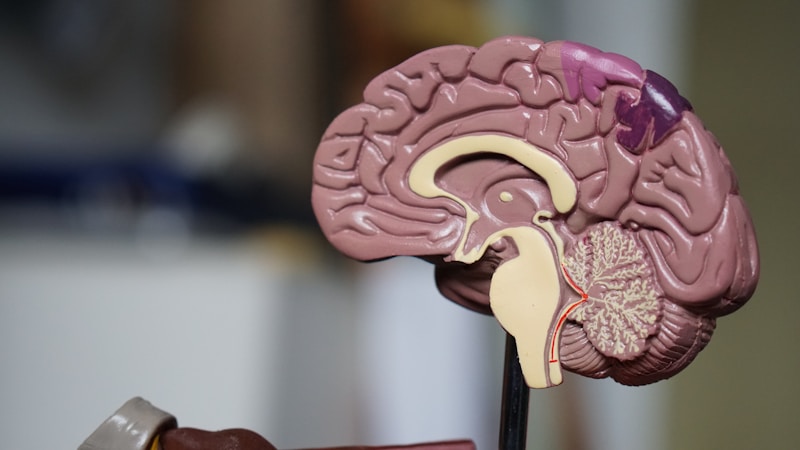
Every night, just before you lose consciousness, your brain passes through a narrow corridor of extraordinary potential. For roughly fifteen minutes, your neural architecture shifts into a configuration that neuroscientists increasingly regard as the brain's most receptive state—a period when the rigid filters of waking consciousness dissolve and the deeper structures of memory, emotion, and learning become unusually accessible. This is the hypnagogic state, and the brainwaves that define it are called theta waves.
Understanding this window requires a brief tour of the brain's electrical vocabulary. Throughout the day and night, billions of neurons fire in rhythmic patterns that electroencephalography (EEG) captures as distinct frequency bands. Each band corresponds to a different mode of consciousness, and the transitions between them are far more significant than most people realise.
The Four Languages of the Brain
During active, focused work—solving problems, holding conversations, making decisions—the brain operates primarily in beta frequencies, cycling between 13 and 30 times per second. Beta is the frequency of analytical thought, but it is also the frequency of stress and rumination. When you close your eyes and relax, the dominant rhythm slows to alpha (8–12 Hz), a calm, present-focused state familiar to meditators and anyone who has experienced a moment of genuine stillness.
Below alpha lies the territory that interests sleep researchers most. Theta waves oscillate between 4 and 8 Hz, and they characterise two distinct states: deep meditation and the transitional phase between wakefulness and sleep. Below theta, delta waves (0.5–4 Hz) dominate deep, dreamless sleep, the phase responsible for physical repair and growth hormone release.
Beta (13–30 Hz): Active thinking, problem-solving, alertness. Alpha (8–12 Hz): Relaxed awareness, calm focus, light meditation. Theta (4–8 Hz): Hypnagogia, deep meditation, heightened neuroplasticity. Delta (0.5–4 Hz): Deep dreamless sleep, physical restoration, immune function.
The transitions between these states are not abrupt. The brain moves through them gradually, and the border zones—particularly the alpha-theta border—have properties that neither state possesses on its own.
Hypnagogia: The Threshold State
The hypnagogic state occupies the narrow territory between full wakefulness and sleep onset. During this period, theta activity increases dramatically while the brain's prefrontal cortex—the seat of logical analysis and critical evaluation—begins to quiet. What neuroscientists call the "critical faculty," the filtering mechanism that evaluates incoming information against existing beliefs, relaxes its grip. The result is a state of heightened suggestibility, vivid imagery, and unusual cognitive flexibility.
This is not a fringe observation. Researchers including Robert Stickgold at Harvard Medical School have documented that the hypnagogic period is characterised by loose, associative thinking that connects ideas in ways the waking mind typically cannot. Stickgold's work on sleep-dependent memory processing has shown that the brain does not simply store information during this transitional phase—it actively reorganises it, forming novel connections between seemingly unrelated concepts.
“The hypnagogic state is not a lesser form of consciousness. It is a different form—one optimised for integration rather than analysis.”
Thomas Edison famously exploited this state for creative insight. He would sit in a chair holding steel balls over metal plates, allowing himself to drift toward sleep. The moment he crossed the threshold and his muscles relaxed, the balls would drop, the clatter would wake him, and he would immediately record whatever ideas had surfaced. Salvador Dali employed a nearly identical technique with a heavy key held above a plate, calling it his "slumber with a key" method. Both understood intuitively what neuroscience has since confirmed: the theta-dominant hypnagogic state produces a form of cognitive processing unavailable to the fully awake mind.
Theta Oscillations and Memory Consolidation
The significance of theta waves extends well beyond creative anecdote. Jan Born and Ullrich Wagner's landmark research on sleep and memory demonstrated that sleep-dependent memory consolidation is not a passive process. Their studies showed that subjects who slept after learning performed significantly better on problem-solving tasks than those who stayed awake for the same duration, and that the improvement was specifically linked to slow-wave and theta activity during the early stages of sleep.
More recently, Antoine Lutz and colleagues at the University of Wisconsin have studied theta oscillations in experienced meditators. Their findings suggest that sustained theta activity is associated with enhanced attentional control and emotional regulation—and that individuals who can maintain theta-dominant states show measurable changes in cortical thickness and connectivity over time. The implication is striking: theta is not merely a transitional frequency. It appears to be the brain's primary mode for structural change.
During theta-dominant states, the hippocampus—the brain's primary memory-encoding structure—shows increased long-term potentiation (LTP), the cellular mechanism underlying learning. LTP during theta is significantly more robust than during beta or alpha states, suggesting the brain is literally more capable of forming lasting neural pathways during this narrow window.
The 15-Minute Window
Sleep architecture research has refined our understanding of when theta activity peaks. In the typical adult, the transition from relaxed wakefulness to stage one sleep takes between ten and twenty minutes. During this period, theta power increases progressively, reaching its highest amplitude approximately twelve to fifteen minutes after the eyes close and the body begins to relax. This is the window of maximum neuroplasticity—the period when the brain is most receptive to new information, emotional reprocessing, and the formation of novel associations.
What makes this window particularly significant is the simultaneous reduction in prefrontal cortex activity. During waking consciousness, the prefrontal cortex acts as a gatekeeper, filtering information through existing beliefs, habits, and cognitive patterns. In the theta state, this filtering mechanism operates at reduced capacity. Information that reaches the brain during this period bypasses much of the critical evaluation that would normally reject or modify it. This is not a vulnerability—it is a feature. The brain needs a period when it can integrate new experience without the constraints of existing mental models.
Theta-State Learning vs Conscious Learning
The distinction between learning in a theta state and learning during full wakefulness is not simply about receptivity. It is about the kind of learning that occurs. Conscious, beta-dominant learning is excellent for acquiring facts, procedures, and explicit knowledge. It is the mode that serves you in a classroom or during deliberate study. Theta-state processing, by contrast, operates on implicit and associative knowledge—the kind of understanding that shapes intuition, emotional responses, and deeply held beliefs.
This distinction helps explain why certain patterns of thought and behaviour resist conscious intervention. A person can understand intellectually that a particular fear is irrational, yet the fear persists because it was encoded at a level that conscious reasoning cannot easily reach. Theta-state interventions work at this deeper level, which is why therapeutic approaches that engage the hypnagogic window are generating growing interest among clinicians and researchers.
“Conscious effort changes what you know. Theta-state processing changes what you feel, believe, and do without thinking.”
Binaural Beats and Theta Induction
One of the most accessible methods for inducing theta activity involves binaural beats—an auditory technique in which slightly different frequencies are presented to each ear. When the brain processes two tones that differ by 4 to 8 Hz, it generates an internal oscillation at that difference frequency, effectively entraining neural activity toward the theta range. The research on binaural beats is mixed in terms of effect size, but several controlled studies have demonstrated measurable increases in theta power and associated improvements in relaxation, creativity, and mood regulation.
The practical application is straightforward. Listening to carefully designed theta-frequency audio during the pre-sleep period may extend and deepen the natural hypnagogic window, allowing the brain to spend more time in its most neuroplastic state. When this audio is combined with specific verbal or conceptual content, the potential for deep-level cognitive and emotional restructuring increases substantially.
The science of theta waves and hypnagogia remains a developing field, but the convergence of evidence from sleep research, meditation studies, and clinical neuroscience points in a consistent direction. The fifteen minutes before sleep are not dead time. They are among the most powerful minutes in the brain's daily cycle—a window when the architecture of thought, emotion, and behaviour is genuinely open to change.